
Theatre Roes
15.02.2026 – 07.04.2026
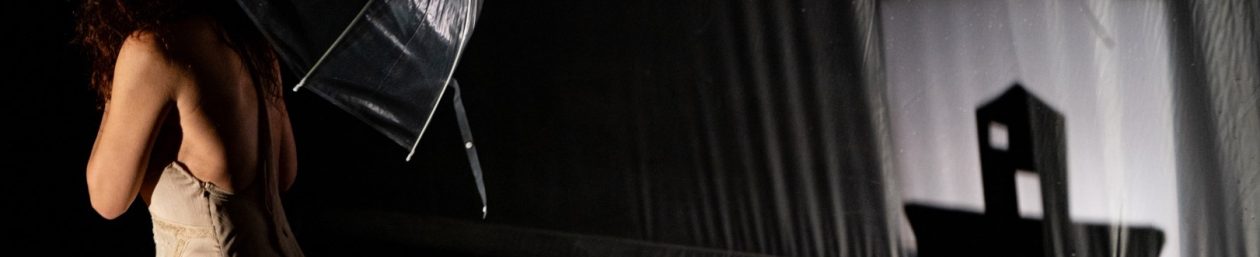
The Two-Character Play, described by Tennessee Williams as his finest work after A Streetcar Named Desire, is one of the playwright’s rarest and most revealing texts. Written and repeatedly revised between 1966 and 1975, the production presents the final version approved by Williams himself. Set in an abandoned theatre, it follows siblings Felice and Clare Devoto, deserted by their company and compelled to perform a play that increasingly mirrors their own lives. Echoing the existential landscapes of Samuel Beckett, the metatheatrical world of Luigi Pirandello’s Six Characters in Search of an Author, John Cassavetes’ Opening Night, the symbolic resonance of the Song of Solomon, and even Plato’s Allegory of the Cave, the play unfolds as a meditation on performance, identity, illusion, and survival. Presented under the auspices of the Hellenic Institute of Cultural Diplomacy – USA, the production reflects Maldoror’s artistic research into female identity, performativity, and the relationship between theatrical language, memory, and human experience, while fostering cultural dialogue between Greece and the United States.

Press / Reviews
“Nana Papadaki’s direction approaches the play with an almost uncompromising clarity. Her reading is austere, almost ‘American’ in the way it confronts the text—a quality that resonates with the play’s own origins. There is no attempt to dramatise an already tragic situation, no effort to turn the story of the two siblings into melodrama, no emotional coercion of the audience, not even an attempt at explanation.
Instead, the production embraces the dark territory in which Williams’ play unfolds. The stage remains stark, almost devoid of anything that might offer comfort or protection. The actors’ gazes are charged with tension, while the psychological state of the characters hovers constantly on the edge of disintegration. Here lies one of the play’s greatest strengths: the sense that the characters are not merely performing a play but are themselves trapped within it.
Nana Papadaki and Vaggelis Papadakis perform on the fragile threshold between control and collapse. Neither actor seeks to explain their character or shield them from the play’s harshness. Instead, they allow them to inhabit the fissure that Williams opens: two people clinging to one another to avoid disappearing, even as the reality surrounding them seems to fall apart.
The Two-Character Play is neither easy nor reassuring. It is a theatrical experience that confronts the fragility of human existence without protective filters. When a production chooses to approach it with such restraint and rigour, the result may appear less overtly theatrical, yet ultimately proves all the more profound.
In the end, two figures remain on stage—and with them the feeling that theatre, like life itself, can continue even when everything around it seems already to have collapsed.”
— Elpiniki Ninou, Palcosenico
“Through dialogues that move from humour to fierce confrontation, fears, insecurities, repressed emotions and unfulfilled desires gradually emerge. The roles performed on stage become inseparable from the actors’ own identities, creating a shifting boundary between being and appearance.
At Roes Theatre, Nana Papadaki and Vaggelis Papadakis did not simply tell a story; they unravelled it before us like a dark skein of emotions, inviting the audience to lose themselves within it and search for their own threads. They become fellow travellers in an artificial society that constantly drags them under while pulling them into a distant vortex of fear and uncertainty. The performance demands that the spectator remain within this instability, confronting personal silences, expectations and disillusionments.
Nana Papadaki directs with remarkable precision, balancing the weight of Williams’ text with the psychological complexity of the heroine she portrays. She leads both character and audience through a labyrinth of memory, guilt and desire, tracing a journey filled with contradictions, conflict and unexpected moments of tenderness.
Vaggelis Papadakis gives Felice extraordinary depth, allowing the character to draw him into its emotional orbit while revealing fleeting glimmers of hope. His portrayal embodies struggle, loneliness and the need to hold on despite everything, making Felice both fragile and deeply recognisable. The moment one realises that fragments of him belong to all of us is profoundly affecting.
The production’s visual austerity mirrors the inner solitude of its characters. The stage becomes at once their home, their necessity and their only possible refuge. Every silence weighs more heavily than words; every gesture conceals something left unspoken. Together, the two actors construct a fragile world held in delicate balance, where conflict and the longing for connection coexist in a continuous, subterranean tension.”
— Mary Zarakoviti, Keysmash
“Nana Papadaki approaches The Two-Character Play as an existential inquiry into the nature of theatre itself. The stage becomes a place of trial where theatrical role-playing gradually merges with personal truth. Confinement assumes a psychological dimension, and performance itself becomes an act of survival. The result is a coherent, intelligent and deeply affecting interpretation that approaches the text with respect and dramaturgical clarity.”
— Open Mind
Both actors served this continual movement through the tunnel of tragedy with remarkable precision. Vaggelis Papadakis conveyed the instability, vulnerability, and moments of lucidity demanded by the play, remaining unwaveringly grounded in the theatrical act. Nana Papadaki, in turn, constantly searched for a spark—a sudden ignition of vitality and intensity that revealed what it might mean to resist the conventions of emotional normality. Such an approach required a director’s clear and assured vision, which was evident throughout the production. Both performances were outstanding and demanding, guiding the audience through a text as singular as it is structurally complex. Ultimately, an actor’s artistry is measured by the degree to which they make a work fully their own.”
— Thanassis Sakellariadis, fractal
“Vaggelis Papadakis and Nana Papadaki embody this condition of isolation with remarkable intensity, revealing art as both sanctuary and confinement. Every attempt to leave the house dissolves into futility. Just when the audience believes the characters have found a way out, one sibling inevitably pulls the other back into a game destined never to end.”
— Maria Mari, artistico
“In The Two-Character Play, Tennessee Williams transforms the stage into a fractured mirror from whose cracks emerge loneliness, dependency, and the fragile identity of the actor. Nana Papadaki’s direction serves the play’s metatheatrical dimension with great sensitivity, maintaining a delicate balance between madness and poetry.
The performances, stripped bare and emotionally exposed, move on the fine line between role and self-revelation—where theatre ceases to be performance and becomes confession. At times, however, the text’s intense introspection slows the dramatic rhythm, asking the audience for sustained attention and patience.
The result is an atmospheric and contemplative production, experienced less as narrative than as lived experience—a whisper in an empty theatre that continues to resonate long after the performance has ended.”
— Chryssoula Zafeiraki, crunchynewz


Production Credits
Translation: Aliki Katsavou
Direction: Nana Papadaki
Lighting Design: Maria Athanasopoulou
Costume Design: Assi Dimitrolopoulou
Original Music: Vassilis Tzavaras
Set Design: Nana Papadaki, Vaggelis Papadakis
Assistant Director: Georgette Aliberti
Performance Photography: Katerina Arvaniti
Photography & Video: Katerina Tzigotzidou
Graphic Design: Kostas Stefanopoulos (GDStudio)
Press & Communications: Marianna Papaki, Nondas Douzinas (Cont Act)
Production: Maldoror non-profit company
Performed by: Vaggelis Papadakis, Nana Papadaki
Presented under the auspices of the Hellenic Institute of Cultural Diplomacy – USA.
Media / Links
- https://www.marieclaire.gr/art-lifestyle/ergo-dio-prosopon-stin-ellada-to-ergo-pou-o-tenesi-ouiliams-iche-charaktirisi-to-kalitero-tou/
- https://www.news247.gr/politismos/theatro/tenesi-ouiliams-to-aristourgima-pou-ekrive-gia-xronia-sto-theatro-roes/
- https://www.news247.gr/politismos/o-tenesi-ouiliams-se-voutaei-sta-tartara-ki-opoios-antexei-na-dei-fos-einai-magkas/
- https://elculture.gr/i-nana-papadaki-moirazetai-to-imerologio-provon-gia-tin-parastasi-ergo-dyo-prosopon/
- https://www.debop.gr/deBlog/interviews/i-nana-apadaki-gia-to-ergo-dyo-prosopon-tou-tenesi-ouiliams
- https://tvxs.gr/politismos/theatro/ergo-dyo-prosopon-i-nana-papadaki-kai-o-vaggelis-papadakis-grafoyn-gia-to-theatriko-toy-tenesi-oyiliams/


Video
